Blog
Jellyblue Supplement Facts: Why Milligrams Matter More Than Ingredient Lists
Quick answer
The Jellyblue Supplement Facts panel lists a serving of one gummy, 30 servings per bottle, and seven actives with their own amounts: tongkat ali 200 mg, maca, ashwagandha and horny goat weed 100 mg each, and L-arginine HCl, beet root and grape seed 50 mg each, 650 mg in total. A name only says an ingredient is present. A milligram figure says how much, so you can check it against research.
Start here
Why does one number beat a long list of names?
Because a name is free and an amount is not. Printing ten botanicals on a front panel costs a designer twenty minutes; putting a researched amount of each in the bottle costs money on every unit sold.
So the list is the weakest part of any supplement advert. The numbers on the back are where a claim becomes checkable.
What follows uses the Jellyblue panel as the worked example, because a label that prints its numbers is the only kind you can work with.
What does a proprietary blend actually hide?
The split. A blend gives one name, one combined weight and a list of what is inside, in order of weight and with no individual figures.
Order of weight sounds like useful information. It is not, because rank says which herb weighs more without saying by how much.
| Line in a 650 mg blend | Version A | Version B | What the shopper can tell |
|---|---|---|---|
| Herb printed first | 600 mg | 25 mg | Both versions are legal, and both print 650 mg |
| Herb printed second | 20 mg | 150 mg | Order tells you the rank, never the gap |
| Herb printed third | 10 mg | 150 mg | A rank can hide a hundredfold difference |
| Four more herbs | 20 mg between them | 325 mg between them | The shopper cannot tell these two bottles apart |
Neither column above describes a real product. They show why the total on its own settles nothing, and why the same total can sit on two very different bottles.
Why are the names printed in that order?
Weight sets the order, heaviest first. That rule runs through the actives on a panel and through the other-ingredients line below it.
It is the most useful rule on any label, and the easiest one to forget while reading an advert.
- On the Jellyblue panel, tongkat ali at 200 mg leads and the 50 mg actives close the list
- On the other-ingredients line, cane sugar comes first, so it outweighs everything after it
- Glucose syrup follows, which is why the panel shows 1.5 g of sugars and 6 calories (FDA, 2024)
- Starch comes last, so the gummy holds less of it than of anything before it
Order alone never gives you a quantity. Order plus a printed figure does, and that pairing is what the rest of this post leans on.
What does the Jellyblue panel print?
Seven actives, each on its own line with its own weight, adding to 650 mg per gummy. There is no blend name and no pooled figure anywhere on the wrap.
Here is the panel as transcribed from the label, so you can read the arithmetic rather than take it from a paragraph.
Supplement Facts
Serving size: 1 gummy · Servings per container: 30
| Amount per serving | Amount | % Daily Value |
|---|---|---|
| Total Calories | 6 | ** |
| Total Fat | 0 g | 0% |
| Saturated Fat | 0 g | 0% |
| Trans Fat | 0 g | ** |
| Total Carbohydrate | 2 g | <1% |
| Total Sugars | 1.5 g | ** |
| L-Arginine HCl (amino acid) | 50 mg | ** |
| Tongkat Ali extract (Eurycoma longifolia) | 200 mg | ** |
| Maca root extract (Lepidium meyenii) | 100 mg | ** |
| Ashwagandha extract (Withania somnifera) | 100 mg | ** |
| Horny goat weed extract (Epimedium sagittatum) | 100 mg | ** |
| Beet root extract (Beta vulgaris) | 50 mg | ** |
| Grape seed extract (Vitis vinifera) | 50 mg | ** |
Percent Daily Values are based on a 2,000 calorie diet. ** Daily Value not established. The seven actives add up to 650 mg per gummy. Other ingredients, as printed: cane sugar, glucose syrup, water, pectin, citric acid, sodium citrate, natural flavor, natural coloring, starch. Allergen statement: not published.
- Serving size is one gummy, so every figure is what a single gummy holds
- Thirty servings a bottle, which is 30 days at the suggested one a day
- Daily Value is not established for any of the seven, hence the double asterisk on each
How do the seven amounts compare with the research?
One is close and six are under. That is the plain result of putting the panel beside the amounts studies have used.
The share column is simple arithmetic from the panel, and it shows how much of the 650 mg each name actually claims.
| Active | Per gummy | Share of the 650 mg | What research has used |
|---|---|---|---|
| Tongkat Ali extract | 200 mg | About 31% | Roughly the range small trials have used |
| Maca root extract | 100 mg | About 15% | Studies used 1.5 to 3 g a day (Shin et al., 2010) |
| Ashwagandha extract | 100 mg | About 15% | Trials usually run 300 to 600 mg (NCCIH, 2023) |
| Horny goat weed extract | 100 mg | About 15% | No settled human amount to compare against |
| Beet root extract | 50 mg | About 8% | Research uses concentrated juice (NIH ODS) |
| Grape seed extract | 50 mg | About 8% | Usually 100 to 300 mg (NCCIH, 2025) |
| L-Arginine HCl | 50 mg | About 8% | Blood-flow work uses grams a day (NIH ODS) |
None of that makes the label dishonest. It makes the label readable, which is the point. A blend would have let the same formula avoid this table completely.
Why does the graphic name six ingredients and the panel seven?
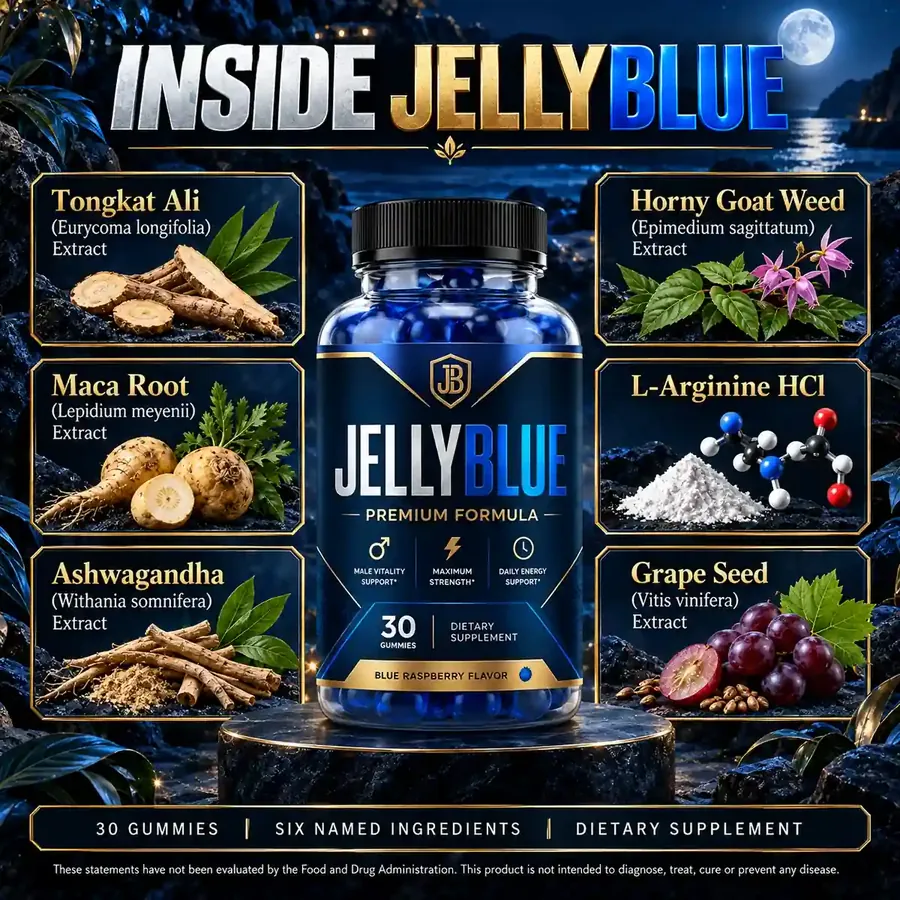
Beet root is the missing name. It carries 50 mg on the panel and does not appear on the graphic or in the sales page list of six.
That is worth noticing for what it teaches rather than for what it costs. Marketing art gets edited for looks, and a label gets edited for accuracy.
Any time a graphic and a panel disagree, take the panel. It is the document with rules attached to it, and it is the one printed on the bottle in your hand.
Check the wrap when your bottle arrives. Seven lines and 650 mg means the formula matches what this site describes, and anything different means the bottle wins.
What can you do with a milligram figure that you cannot do with a name?
Four things, and all four are the reason this post exists. Each one takes a minute and none needs any special knowledge.
Run those four on any product you are considering. Most of the men's aisle fails at the first step, and failing it is a choice the seller made.
Where do milligrams stop helping?
Sooner than a number-loving shopper would like. A weight is a strong piece of information and it is not the whole story.
- No extract ratio or standardization is printed for any of the seven actives
- No independent laboratory result is published for the finished gummy
- No study exists on the seven together, only on ingredients apart
- A printed figure says nothing about how much the body takes up
So read the panel first and stop treating it as a verdict. The tongkat ali post covers the evidence behind the largest number here, and the cautions page covers the interactions worth raising with a doctor before the first gummy.
Milligrams, blends and panels: common questions
What counts as a named amount?
One ingredient, one weight, on its own line of the Supplement Facts panel. All seven Jellyblue actives are printed that way, from 200 mg down to 50 mg.
Is a proprietary blend against the rules?
No. A blend may show one combined weight and list what is inside it without giving individual amounts. It is permitted, and it removes the one figure a buyer could check.
Does a bigger total mean a better product?
No. Six hundred and fifty milligrams of the wrong material would still be 650 mg. The total is only useful once you can see how it is split, which is the point of printing every line.
Why compare a label with research at all?
Because studies are where the amounts come from. If a panel prints far less than the studied amount, the studies stop being a fair argument for the product.
Which Jellyblue amount is closest to research?
Tongkat ali at 200 mg. It sits roughly inside the range small published trials have worked with. Maca, ashwagandha, grape seed and arginine all come in well under.
Why does the sales page name six ingredients?
The Inside Jellyblue graphic lists six and leaves out beet root at 50 mg. The panel lists seven. Where a graphic and a label disagree, the label is the document that has to be right.
Does the sugar count as an ingredient?
It appears twice: 1.5 g of total sugars in the panel and cane sugar leading the other-ingredients line. Added sugar means sugar put in during manufacturing (FDA, 2024).
Where can I see the full panel?
It is transcribed line by line on the Supplement Facts page, and the label guide explains each part of the box.
References
- U.S. Food and Drug Administration (2024). Added Sugars on the Nutrition Facts Label.
- National Center for Complementary and Integrative Health (2023). Ashwagandha: Usefulness and Safety.
- National Center for Complementary and Integrative Health (2025). Grape Seed Extract: Usefulness and Safety.
- NIH Office of Dietary Supplements (accessed 2026). Dietary Supplements for Exercise and Athletic Performance.
- Shin BC, Lee MS, Yang EJ, Lim HS, Ernst E (2010). Maca (L. meyenii) for improving sexual function: a systematic review, in BMC Complementary and Alternative Medicine 10:44.
Ready when you are
Order Jellyblue from the authorized outlet
Packs of 1, 2, 3 or 6 bottles, 30 gummies each, priced on the secure order page. Every order has a 60-day money-back guarantee. Questions first? The contact page lists every desk.

Keep reading
Jellyblue Supplement Facts
The whole label panel typed out: nutrition rows, actives, other ingredients and the distributor block.
Read →GuideHow to Read a Supplement Label
Serving size, Daily Value, blends, other ingredients and the distributor block, worked on a real panel.
Read →AdvertisingWhite coats and star ratings
A coat with no name attached, and a review block that repeats beside other products.
Read →