Reviews
Jellyblue Reviews and How We Handle Them
Quick answer
No Jellyblue star rating, review count or testimonial is shown on this site, because none of them can be checked.
This page explains why, and shows you how to judge supplement reviews on your own.
Meanwhile, start with the Jellyblue ingredient list.
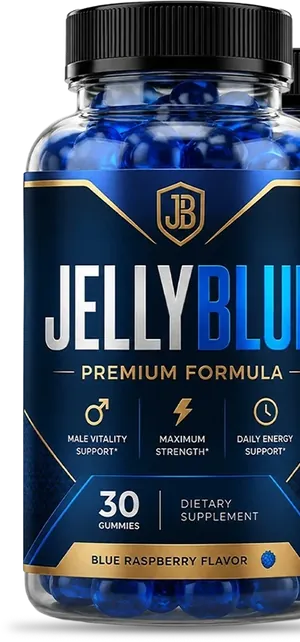
Start here
Where are the Jellyblue reviews on this site?
There are none, and that is a decision rather than an oversight. No star rating, no review count and no customer quotes appear anywhere on this website.
The only feedback available for this product is the block printed on the seller's own sales page. Its wording repeats, word for word, beside other products in other categories. Copy that is reused across a catalog describes a template, not a customer.
- No score is published here, because no checkable score exists
- No review count is published, because no reviews can be opened
- No testimonials are published, because none can be traced to a person
- No photograph on this site is presented as a customer
What does the seller's Jellyblue review block show?
Four numbers and a row of quotes. Each one is listed below with the reason it is not repeated here as evidence.
The point is not that any single figure has been proved wrong. It is that none of them can be checked by you, by this site, or by anyone outside the company that printed them.
| What the block shows | What is missing | Why this site does not repeat it |
|---|---|---|
| A 4.8 out of 5 score | No method, sample or date is attached to it | A score with no denominator you can inspect is decoration |
| 1,190 written reviews | None of them can be opened, sorted or filtered | A count is not the same as readable feedback |
| 5,476 orders | No period is given, and no source | An order figure is a sales claim, not customer experience |
| 89% recommend | No question wording is shown | A recommendation rate depends entirely on what was asked |
| Named quotes with photos | The same wording appears on other products' pages | Text repeated across different products is template copy |
A figure becomes useful the moment a reader can inspect what sits underneath it. Until then it is a graphic with digits in it.
What is the row of polaroid photos on the sales page?

Polaroid frames, scattered angles and handwritten-looking captions are a familiar layout device. They borrow the visual grammar of a shoebox of family photographs and attach it to a product page.
Nothing about that styling adds information. There is no date, no purchase record, no way to reach anyone in the pictures and no way to ask what they actually took.
Design that imitates evidence is worth naming for what it is. Once you see the device you will see it on dozens of supplement pages.
If a page wants a photograph to work as proof, it has to be connected to something checkable. A frame around an image does not do that job.
Who is the person in the white coat?

A white coat is a costume available to anyone. What turns it into a credential is a name attached to a license that somebody else issued and can withdraw.
None of that is published here. The picture sits near the phrase doctor developed, and neither the phrase nor the photograph names a physician.
Ask the order desk who developed the formula. A name that can be looked up would change this section; nothing else would.
The seals page covers the doctor developed roundel alongside the rest of the marks on the pack.
What would make a supplement review worth reading?
Specifics you could check, and a person you could imagine meeting. Four things separate a useful account from a slogan.
Hold the seller's block against those four. It fails all of them, which is the whole argument of this page in one sentence.
How do you judge supplement reviews for yourself?
With five steps that work on any product page. They take about two minutes and they cost nothing.
Search one sentence in quotation marks
Pick a distinctive line from a testimonial and search it exactly. Template copy shows itself immediately.
Read the worst reviews first
If none exist, that is your answer. If they do, they usually describe the product more accurately than the best ones.
Check the face
A reverse image search on a portrait takes seconds. Stock photography turns up quickly.
Ignore outcomes, read logistics
Delivery, packaging, flavor and customer service are things a buyer can honestly report. Health outcomes are not reviewable in a paragraph.
Compare the label against research
Government fact sheets give the amounts used in studies, such as the NIH page on supplements for exercise and performance (NIH ODS). A panel beats a paragraph.
That last step is the one people skip and the one that pays. A maca review is a story; a systematic review finding the evidence for sexual function too limited to judge (Shin et al., 2010) is information.
What are the red flags in a supplement review section?
Six patterns show up again and again in this category. Any one of them is a reason to slow down.
| Red flag | Why it matters | What to do |
|---|---|---|
| Every review is five stars | Real products collect a spread of opinions | Look for the two-star reviews and read those first |
| Reviews share a rhythm | Same length, same structure, same enthusiasm | Read three in a row and listen for one voice behind them |
| No timeline or dose detail | A real user says how long and how much | Vague praise costs nothing to write |
| Medical outcomes described | Supplements are not permitted to claim them | A quote making a disease claim is a warning sign about the seller |
| Stock photography faces | A portrait that appears on other sites too | Run a reverse image search before believing a face |
| The same quote on another product | Template copy reused across a catalog | Search a distinctive phrase in quotation marks |
None of these prove dishonesty on their own. Together they describe a page built to persuade rather than to inform, and that is worth recognizing before a card comes out.
What should you read about Jellyblue instead?
The parts of this product that can actually be checked. Three of them are more informative than any testimonial would be.
The label panel
Seven actives, each with a real milligram figure, adding up to 650 mg per gummy. Most gummies in this category hide them in a blend.
Read more →The amounts against research
Tongkat ali at 200 mg sits near the range small trials have used; maca, ashwagandha and arginine are well under it.
Read more →The seals and what they omit
Eleven marks on the pack, no certifier named for any of them, and no allergen statement on the label.
Read more →Read those three, then decide. If you do order, keep the order email and the 60-day money-back guarantee in mind: the guarantee page sets out the window, and the cautions page covers the interactions to raise with a doctor first.
Jellyblue reviews: the questions behind the empty page
Why are there no Jellyblue reviews on this page?
Because the only feedback available is the seller's own block, and its wording turns up on unrelated products. Copying it here would move an advertisement one step closer to looking like evidence.
Is the 4.8 out of 5 score real?
It cannot be checked. No sample, no date range, no method and no way to open a single underlying review are published, so the number cannot be confirmed or disproved by a reader.
Are the named quotes from real customers?
This site has no way to know, and the same wording appearing beside different products is a reason for caution. Names and faces are the easiest part of a testimonial to supply.
Who is the person in the white coat?
No name, license number, specialty or institution is published for them anywhere on the sales page. A photograph of a coat is a costume until a credential is attached to it.
Will you publish reviews later?
Only feedback that can be traced would be worth publishing, and none exists for this product today. An invented review would be worse than an empty page, so the page stays empty.
Where can I find honest opinions about Jellyblue?
Ask the order desk what they can tell you, read the label panel on the Supplement Facts page, and check the ingredient amounts against published research rather than against a stranger's story.
Does a missing rating mean the product is bad?
No. It means nothing verifiable exists to publish. The strongest thing about this product sits on the label rather than in a testimonial: every active carries a real milligram figure.
What should I do before trusting any supplement review?
Search one distinctive sentence from it in quotation marks. If the same sentence appears under a different product name, you have learned everything you need to know about that review section.
References
- NIH Office of Dietary Supplements (accessed 2026). Dietary Supplements for Exercise and Athletic Performance.
- Shin BC, Lee MS, Yang EJ, Lim HS, Ernst E (2010). Maca (L. meyenii) for improving sexual function: a systematic review, in BMC Complementary and Alternative Medicine 10:44.
Ready when you are
Order Jellyblue from the authorized outlet
Packs of 1, 2, 3 or 6 bottles, 30 gummies each, priced on the secure order page. Every order has a 60-day money-back guarantee. Questions first? The contact page lists every desk.

Keep reading
Jellyblue Testing & Quality
Eleven seals on one sales page, and what each of them can and cannot tell a buyer.
Read →QualityJellyblue Batch Verify
What the lot and CoA numbers really are, and the checks to run the minute a bottle lands.
Read →AdvertisingWhite coats and star ratings
A coat with no name attached, and a review block that repeats beside other products.
Read →