Side effects
Jellyblue Side Effects: What to Watch For
Quick answer
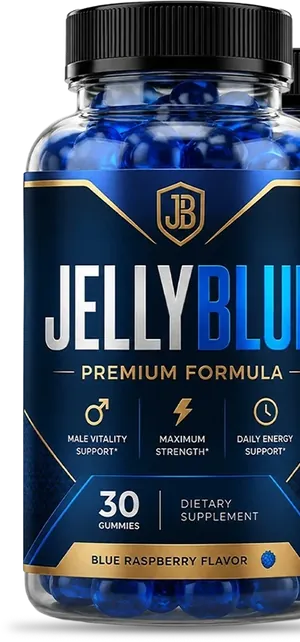
No side effects are published for the finished Jellyblue gummy, so the cautions come from its seven actives.
Ashwagandha can affect thyroid medication and has rare liver reports, grape seed can add to blood thinners, and arginine and beet root affect blood flow. It is not for children or for pregnant and nursing women.
Start here
What is known about Jellyblue side effects?
Nothing has been published about the finished gummy, because no study has been run on it. Any page with a side effect rate for this product invented it.
What can be described honestly is each active, its known cautions, and the warning the bottle prints.
What does each Jellyblue active carry with it?
Seven actives, 650 mg in total, each with its own short safety record. The table keeps the amount beside the caution, because the amount changes how much weight a caution carries.
Two of the seven have no federal fact sheet. That is missing data, not a clean bill of health.
| Active | Per gummy | What is reported | Who should ask a doctor |
|---|---|---|---|
| Ashwagandha | 100 mg | Stomach upset and drowsiness are reported most often. Rare liver injury has been reported (NCCIH, 2023) | Thyroid medicine, liver conditions, pregnancy and nursing |
| Grape seed | 50 mg | Generally well tolerated in reviewed studies (NCCIH, 2025) | Anyone on a blood thinner or facing surgery |
| L-Arginine HCl | 50 mg | Amino acids unsettle some stomachs. Blood-flow effects are studied at gram amounts (NIH ODS) | Blood-pressure and nitrate medicine |
| Beet root | 50 mg | A nitrate source. Beet juice can colour urine pink, though 50 mg is a small amount | Blood-pressure and nitrate medicine |
| Tongkat ali | 200 mg | Human trials are small and no federal fact sheet exists, so the safety picture is thin | Anyone with a medical condition, because the data cannot answer for you |
| Maca root | 100 mg | Usually described as well tolerated as a food. Review evidence for sexual function was too thin to judge (Shin et al., 2010) | No specific interaction is established |
| Horny goat weed | 100 mg | Little human research and no federal fact sheet. Unknown rather than clean | Anyone with a heart condition should ask, because the data is absent |
None of this describes the gummy as a whole. Seven extracts taken together have not been tested.
Why does ashwagandha need the most care in Jellyblue?
Because it carries the two clearest cautions on the panel, and 100 mg of it arrives every day.
NCCIH reviews it for stress and sleep and describes the data as limited, usually over two to four months (NCCIH, 2023). The safety notes are the part that matters here.
Thyroid medicine
Ashwagandha may interact with thyroid medicine. If you take levothyroxine or another thyroid drug, ask whether this changes your dose or your next test result. A pharmacist can answer it in five minutes, because the panel prints the amount.
The liver
Rare liver injury has been reported with ashwagandha products. Rare is the right word, and it is still worth knowing the signs: yellow skin or eyes, dark urine, unusual tiredness or pain under the right ribs. Any of those means stop and get medical help.
Pregnancy and nursing
NCCIH advises against ashwagandha during pregnancy, and the Jellyblue label already rules out pregnant and nursing mothers. Both point the same way.
Which medicines clash with Jellyblue ingredients?
Three groups have a named reason rather than a general worry, each tied to one active and one amount.
What to bring to the appointment
- The bottle, so the panel can be read rather than described
- Your medicine list, including anything bought over the counter
- Any other supplement you take, because men's formulas repeat the same herbs
- The question you want answered: start, avoid, or start and monitor
Is the sugar in Jellyblue a problem?
For most people it is small. For a few it is worth counting, and the panel makes that possible. Each gummy holds 1.5 g of total sugars inside 2 g of carbohydrate, and 6 calories. Cane sugar and glucose syrup lead the other-ingredients line (FDA, 2024).
- 1.5 gtotal sugars per gummy
- 6calories per gummy
- 2 gtotal carbohydrate
- 1gummy per day on the label
Who should keep an eye on it
- Anyone managing diabetes or counting carbohydrates, because a daily sweet adds up in a log
- Anyone on a low sugar plan, where small daily amounts still count
- Anyone with dental concerns, since a chewy sweet sits on teeth; the 8 oz of water helps
One gummy is not a dessert. It is also not sugar-free, and the label never says it is.
Who must not take Jellyblue?
Two groups, set by the label, plus one rule about the bottle. None is negotiable.
- Children and teenagers under 18, with no exception published
- Pregnant or nursing mothers
- Anyone whose safety seal is damaged or missing, whatever the reason
- Anyone told by their doctor to avoid these herbs
Keep it away from children
A blue raspberry gummy looks exactly like candy. Store the tub high, closed and out of sight.
If a child swallows any, call your local poison control centre and take the bottle with you.
When should you stop taking Jellyblue?
The moment something feels wrong. A supplement is optional, so nothing weighs against stopping. The table names the signs that deserve action rather than a wait-and-see week.
| What you notice | What to do | Why it is on this list |
|---|---|---|
| Yellow skin or eyes, dark urine, pain under the right ribs | Stop and seek medical help the same day | These are the liver signs named in ashwagandha reporting |
| Unusual bruising or bleeding that will not stop | Stop and call your doctor | Grape seed may add to a blood thinner |
| Dizziness, faintness or a pounding headache | Stop and get your blood pressure checked | Arginine and beet root both touch blood vessel width |
| Rash, swelling of the lips or face, trouble breathing | Emergency care immediately | No allergen statement is published for this product |
| Stomach pain, nausea or loose stools that persist | Stop and speak to a doctor | Plant extracts and amino acids unsettle some stomachs |
Stop the gummy
A day off costs nothing. Continuing while you wonder does.
Keep the bottle
Your doctor may want the panel, and the lot number is on the base.
Call a doctor, not the order desk
The desk handles tracking, changes and refunds. It is not a medical line.
Decide about the refund later
Health first, paperwork after. The refund policy explains the window and the steps.
Reporting matters too. Serious problems can be reported to the FDA, which is how patterns in this category surface (FDA, 2026).
Jellyblue safety: the questions that matter most
Does Jellyblue have side effects?
None is published for the finished gummy, and no trial has been run on it. What can be described are the known cautions for each of the seven actives, which is what this page does.
Can Jellyblue affect my thyroid medicine?
Ashwagandha may interact with thyroid medicine (NCCIH, 2023). The gummy holds 100 mg of it. Ask your doctor before the first one, and mention it before your next blood test.
Is ashwagandha safe for the liver?
Rare cases of liver injury have been reported with ashwagandha products (NCCIH, 2023). Rare means uncommon, not impossible. Yellow skin or eyes, dark urine or pain under the right ribs mean stop and get medical help.
Can I take Jellyblue with a blood thinner?
Ask your doctor first. Grape seed may add to the effect of blood thinners (NCCIH, 2025), and this gummy carries 50 mg of it every day.
Does Jellyblue affect blood pressure?
Nothing is published about the finished gummy. Arginine and beet root are both tied to nitric oxide and blood vessel width (NIH ODS), so anyone on blood-pressure or nitrate medicine should ask a doctor before starting.
How many grams of sugar does a Jellyblue gummy carry?
1.5 g of total sugars and 6 calories per gummy, with cane sugar and glucose syrup leading the other-ingredients line (FDA, 2024). Small for most people, and worth counting if you track carbohydrates.
Can pregnant women or teenagers take Jellyblue?
No. The label limits it to adults 18 and over and rules out pregnant and nursing mothers. NCCIH also advises against ashwagandha in pregnancy (NCCIH, 2023).
What should I do if Jellyblue makes me feel unwell?
Stop taking it and speak to a doctor. Keep the bottle so the panel and the lot number can be read. For order questions, the order desk is listed in the site footer.
References
- U.S. Food and Drug Administration (2024). Added Sugars on the Nutrition Facts Label.
- U.S. Food and Drug Administration (2026). Tainted Sexual Enhancement Products.
- National Center for Complementary and Integrative Health (2023). Ashwagandha: Usefulness and Safety.
- National Center for Complementary and Integrative Health (2025). Grape Seed Extract: Usefulness and Safety.
- NIH Office of Dietary Supplements (accessed 2026). Dietary Supplements for Exercise and Athletic Performance.
- Shin BC, Lee MS, Yang EJ, Lim HS, Ernst E (2010). Maca (L. meyenii) for improving sexual function: a systematic review, in BMC Complementary and Alternative Medicine 10:44.

Ready when you are
Order Jellyblue from the authorized outlet
Packs of 1, 2, 3 or 6 bottles, 30 gummies each, priced on the secure order page. Every order has a 60-day money-back guarantee. Questions first? The contact page lists every desk.

Keep reading
Who Jellyblue Is For
Who fits this gummy, who should ask a doctor first, and who the label rules out.
Read →The productJellyblue Ingredients
All seven named actives, their milligrams, and the one the sales page leaves out.
Read →The productJellyblue Supplement Facts
The whole label panel typed out: nutrition rows, actives, other ingredients and the distributor block.
Read →